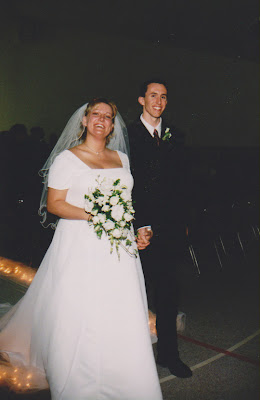
11.8.09


Downed German Fighter


B Company


Destuction of War


Pictures below from a captured German soldier.


Canadian Hawker Typhoon Fighter-Bomber


6.8.09

Some War Cartoons


Liberation

No one is capable of gratitude as one who has
emerged from the kingdom of night.
-Ellie Wiesel


3.8.09

Important Dates in WW11

1944

June 6th - Operation Neptune/Overlord - Allied invasion of Normandy. June 27th - US Army captures Cherbourg.
July 3rd - Soviets re-capture Minsk.
July 7th - Japanese defeat on Saipan.
July 9th - Allies capture Caen.
July 20th - German assassination attempt on Hitler fails.
July 21st - US landings on Guam.
July 25th - Beginning of Operation Cobra - Allied breakout from Normandy.
July 28th - Soviets take Brest-Litovsk.
August 4th - Allies liberate Florence.
August 15th - Operation Anvil - Allied landings in South of France.
August 25th - Allies liberate Paris.
August 28th - Liberation of Marseilles/Toulon.
August 30th - Germans abandon Bulgaria.
August 31st - Soviets capture Bucharest.
September 2nd - Pisa liberated.
September 3rd - Antwerp/Brussels liberated.
September 5th - Soviets declare war on Bulgaria.
September 12th - Le Havre liberated.
September 17th - Operation Market Garden - failed airborne assault in Holland. September 22nd - Boulogne liberated.
September 26th - Estonia occupied by Soviets.
September 28th - Liberation of Calais.
October 1st - Soviets enter Yugoslavia.
October 4th - Allies land in Greece.
October 14th - Athens liberated.
October 20th - Liberation of Belgrade.
October 21st - Allies capture Aachen.
October 23rd - Soviets enter East Prussia.
November 4th - Surrender of Axis forces in Greece.
November 24th - French capture Strasbourg.
December 16th - German attack through Ardennes - Battle of the Bulge begins.
December 26th - US troops hold Bastogne - Ardennes offensive stalls.

1945

January 1st - Germans withdraw from Ardennes.
January 16th - German Ardennes "Bulge" eliminated.
January 17th - Soviets capture Warsaw.
January 26th - Japanese retreat to Chinese coast.
January 26th - Soviets liberate Auschwitz.
February 2nd - Trier captured by Allies.
February 4th - Manila falls to Allies.
February 17th - Koblenz falls to Allies.
February 19th - Japanese evacuate Mandalay.
February 19th - US landings on Iwo Jima.
February 20th - Saarbrucken captured by Allies.
February 23rd - Poznan falls to Soviets.
February 20th - Danzig captured by Soviets.
April 1st - US invades Okinawa.
April 10th - Hanover falls to Allies.
April 11th - Soviets and Yugoslavs sign treaty.
April 12th - US President Roosevelt dies - Truman becomes President.
April 13th - Soviets capture Vienna.
April 15th - Allies capture Arnhem.
April 23rd - Soviets enter Berlin.
April 20th - Nuremburg falls to Allies.
April 28th - Mussolini captured by partisans and executed.
April 30th - Hitler commits suicide.
May 2nd - German forces in Italy surrender.
May 4th - German forces in Holland, Denmark and N W Germany surrender.
May 5th - Ceasefire on Western Front.
May 7th - German unconditional surrender.
May 8th - VE Day declared.
May 9th - Soviets occupy Prague.
May 9th - Liberation of Channel Islands.
June 10th - Australians invade Borneo.
June 22nd - US forces capture Okinawa.
August 6th - Atomic bomb dropped on Hiroshima.
August 8th - Soviets declare war on Japan.
August 9th - Atomic bomb dropped on Nagasaki.
August 14th - Japanese surrender.
August 15th - VJ Day declared.
September 5th - British land in Singapore.
September 7th - Japanese surrender Shanghai.
September 9th - Surrender of remaining Japanese forces in China. September 13th - Japanese surrender in Burma.
September 16th - Japanese surrender in Hong Kong.

2.8.09

Black Watch History and Facts


The Black Watch Badge is made up of the following:
The Star of the Scottish Order of the Thistle. The star of the Order consists of silver St Andrew's saltire, with clusters of rays between the arms thereof. On the Star, a thistle wreath. Within the wreath there is an oval inscribed with "Nemo Me Impune Lacessit" (or Lacesset) (No One Provokes Me with Impunity), which is surmounted by a crown. Also within the oval stands St. Andrew holding a cross. The patron saint of the Order of the Thistle is St Andrew.
Across the top of the wreath the scrolls are inscribed with "The Royal Highlanders". At the bottom on either side of the sphinx the scrolls are inscribed with "Black Watch".

The Black Watch was raised in a unique way. In the wake of the 1715 Jacobite rebellion companies of trustworthy Highlanders were raised from loyal clans, Campbells, Grants, Frasers, Munros.
Six companies were formed from 1725 and stationed in small detachments across the Highlands to prevent fighting between the clans, deter raiding and assist in enforcing the laws against the carrying of weapons.
In 1739 King George II authorized the raising of four additional companies and these all to be formed into a Regiment of the Line of the regular army with the Earl of Crawford as the Colonel. The men were to be “natives of that country and none other to be taken". The first muster of the new Regiment took place near Aberfeldy the following year and is commemorated by a monument in the form of a soldier dressed in the uniform of those days.
The original uniform was a twelve yard long plaid of the dark tartan which is now so well known as The Black Watch tartan. This was fastened around the body with a leather belt. The jacket and waistcoat were scarlet with buff facings and white lace and a blue bonnet was worn. The men were armed with a musket and bayonet, a broadsword and generally also a pistol and dirk (long dagger).

The title “The Black Watch” was derived from the dark colour of the tartan and the original role of the Regiment to “watch” the Highlands. The name has remained and is now incorporated in the official name of the Regiment.
In the British Army (as well as Commonwealth armies), Cap Badges are extremely important, with each regiment and corps having its own. In some regiments, officers and other ranks have different cap badges. When a soldier is assigned to a regiment or corps, it is known as being capbadged to that organization.
Additional items that reflect a regiment's historical accomplishments, such as backing cloth and hackles, may be worn behind the cap badge. In Scottish regiments, for instance, it is a tradition for soldiers to wear their cap badges on a small square piece of their regimental tartans.

Black Watch (Royal Highland Regiment), only the pipers and drummers wear the regimental cap badge with their glengarries and feather bonnet, while the rest of the regiment wears the red hackle with their blue balmoral and tam o'shanter.

Canadian Black Watch
Canada from 1862 has its own Black Watch, being raised as the 5th Battalion of the Canadian Militia, being renamed by 1914 as the 5th Regiment (Royal Highlanders of Canada). It adopted its current title, The Black Watch (Royal Highland Regiment) of Canada, prior to the Second World War, in which it served in the 2nd Canadian Infantry Division from mobilization in 1939 to 1945. Two battalions of the Black Watch (RHR) of Canada also served in Canada, one in the Regular Army, the other as a Reserve unit. For brief time between 1953 and 1970, the Regiment had two battalions on the order of battle of the Regular Force, with a battalion in the Militia. The Regiment reverted to a one-battalion Militia unit in 1972 and remains in that status today. As the senior Highland regiment in Canada they were associated with the Black Watch of the British Army, eventually taking the same name and later the red hackle that all Black Watch soldiers wear on their headdress.

23.7.09

JUST A COMMON SOLDIER


He was getting old and paunchy and his hair was falling fast, And he sat around the Legion telling stories of the past.Of a war that he had fought in and the deeds that he had done. In exploits with his buddies, they were heroes everyone.And tho' sometimes to his neighbours, his tales became a joke,All his Legion buddies listened, for they knew whereof he spoke.
But we'll hear his tales no longer for old Bill has passed away. And the world's a little poorer for a soldier died today.He will not be mourned by many. Just his children and his wife, For he lived an ordinary quiet and uneventful life. Held a job and raised a family, quietly going his own way, And the world won't note his passing tho' a soldier died today.
When politicians leave this earth, their bodies lie in state. While thousands note their passing and proclaim that they were great. Papers tell their life stories, from the time they were young,But the passing of a soldier goes unnoticed and unsung.Is the greatest contribution to the welfare of our land,A guy who breaks his promises and cons his fellow man?
Or the ordinary fellow who in time of war and strife, Goes off to serve his country and offers up his life? A politician's stipend and style in which he lives. Are sometimes disproportionate to the service that he gives,While the ordinary soldier, who offers up his all, Is paid off with a medal, and perhaps a pension small.
It's so easy to forget them, for it was so long ago. That the Old Bill of our country went to battle, but we know,It was not the politicians, with their compromise and ploys, Who won for us the freedom that our country now enjoys. Should you find yourself in danger with your enemies at hand,Would you want a politician with his shifting stand?
Or would you prefer a soldier who has sworn to defend. His home, his kin and country and would fight until the end? He was but a common soldier and his ranks are growing thin. But his presence should remind us we may need his like again. For when countries are in conflict, then we find the soldiers part. Is to clean up the troubles that the politicians start.
If we can not do him honour while he's here to hear the praise. Then at least let's give homage at the ending of his days, Perhaps just a simple headline in a paper that would say: "OUR COUNTRY IS IN MOURNING, FOR A SOLDIER DIED TODAY"

A.Lawrence Vaincourt.

11.7.09

Canadian War Cemeteries in Netherlands


The Canadian War Cemeteries are kept immaculate. The care of the Dutch people ensures that the memory of those men will be honored forever. In southwest Netherlands is Bergen op Zoom Canadian War Cemetery, where 968 Canadians are buried; casualties of the Battle of the Scheldt. Near Nijmegen in eastern Netherlands is Groesbeek Canadian War Cemetery, where 2,300 Canadians rest and another 103 are memorialized since they have no known graves. North of the City of Holten in northeast Netherland is the Holten Canadian War Cemetery, where 1,355 Canadians are buried, most of whom were killed in the later stages of the war.
Canadians who died in the Netherlands are also buried at the Reichwald Forest Cemetery in Germany (706 RCAF and 1 soldier), the Rheinberg War Cemetery in Germany (516), and the Adegem Canadian Way Cemetery in Belgium (848 mostly from the Battle of the Scheldt).
The cost of De Bevrijding was high. Canadians are proud of their role. The Dutch will never forget. It can be summed by the inscription on the memorial at Groesbeek Canadian War Cemetery “We live in the hearts of friends for whom we died.”

Lest We Forget.

WWII Casualties


The Black Watch suffered more casualties than any other Canadian infantry battalion in Northwest Europe according to figures published in The Long Left Flank by Jeffrey Williams. Disaster seemed to follow the unit; on the voyage to France on the day of the Dieppe Raid, casualties were suffered by the unit during a grenade priming accident onboard their ship.


During the Battle of Verrières Ridge on July 25, 1944, 325 men left the start line and only 15 made it back to friendly lines, the others being killed or wounded by well entrenched Waffen SS soldiers and tanks.
On 13 October 1944 - known as Black Friday by the Black Watch - the regiment put in an assault near Hoogerheide during the Battle of the Scheldt in which all four company commanders were killed, and one company of 90 men was reduced to just four survivors.


Pipe Major H. McDonald, Piper D.W. MacDonald and Piper W.J. Hannah at the burial of 55 infantrymen of "A" Company, The Black Watch (Royal Highland Regiment) of Canada, Ossendrecht, Netherlands, 26 October 1944.

10.7.09

Battle Honours of the Leonard Paul Rundvall


The 1939-45 Star

The France and Germany Star

The Defense Medal

Canada 1939-45 Voluntary Service Medal

1939-45 King George Service

6.7.09

Queen of Netherlands Bronze Cross for Bravery

In 1948, Len was called to an Investiture in Saskatoon,
where the Dutch Ambassador awarded him with the
Queen of Netherlands Bronze Cross for Bravery
Royal Decree No. 2 8/12/45


Letter to Theodore Rundvall (Leonard’s Father)


The Netherlands Bronze Cross is an award for valour, apparently similar to the Distinguished Service Medal and the Military Medal, which are very high honours for NCOs. Leonard was one of five members of the Regiment to win the award and his name is Appendix E - Honours and Awards - of Paul Hutchinson's book Canada's Black Watch.

4.7.09

Canada came of age during the Second World War


.....has focused on the details of actions at the battalion and company level. The evidence confirms my belief that historians have greatly underrated the achievements of the Allied combat troops who inflicted a series of defeats on the German army and thereby played the major role in the liberation of the people of North-West Europe.

It was a war of company and platoon commanders, sergeants and, above all, the junior NCO who lead troops into battle. Many of these were unlikely heroes for the infantry rarely attracted the biggest, the best and the brightest. The very ordinary young Canadians, the “long, the short and the tall,” who fought the battle to liberate North-West Europe turned out to be quite extraordinary. Bless them all!


A static battle of attrition, gains measured in yards and thousands of dead.


Total casualties for the Black Watch Regiment as a whole amounted 2,150 men. For service during the war over two hundred honours and awards were made to personnel of the Regiment.

After the war:

In the first decade after the war Canadians had little difficulty in giving meaning to the achievements and sacrifices of the men and women of the armed forces. The horrors of the Third Reich were fresh in everyone’s mind and no one doubted that Canadians has made a major contribution to the defeat of the “monstrous tyranny which had threatened the survival of Western Civilization."
This came under attack in the 1960s from a generation influenced by the war in Vietnam and rise of a new nationalism. All wars were suspect and the kind of patriotism which had formed the context for Canadian participation in the Second World War seemed to closely tie to Britain to be acceptable.

Darrell remembers one cold Remembrance Day in Naicam in 1969 or 70; the dead leaves were blowing from the North. The Legion was marching west up the main street, and I was wearing my army surplus jacket, the group of young people weren’t laughing but we didn't understand and we didn’t have the proper respect. I remember Dad eyes looking at me as he was marching. I wish in hindsight we would have talked to the veterans and shown them respect. Sign of the time.


However much we may honor the "Unknown Soldier" as the symbol of sacrifice in war, let us not mistake the fact that it is the "Known Soldier" who wins battles. Sentiment aside, it is the man whose identity is well known to his fellows who has the main chance as a battle effective. - Colonel S.L.A. Marshall.

The Canadians who landed in Normandy and the Canadians who fought through Buron and Authie, Verriers Ridge and the Falaise Gap deserve to be remembered by their country. They were not all saints, they were not all heroes. But there were saints and heroes among them, as they fought in the dust and hest of Normandy that summer of 1944. Remember them and remember their achievements. -J.L. Granatstein and Desmond Morton, Bloody Victory; Canadians and the D-Day campaign 1944.

3.7.09

And in the hearts and memories of his family.


Leonard Paul deceased Sept 30 1982


Every soldier, in the course of time, exists only

in the breath of written words.
(The Eleventh Man by Ivan Doig)


And in the hearts and memories of his family.


Kevin 1982


Second Three Amigo's


Four Kids


Devon helping Grandpa 1979


Mother's Day with Naomi 1979


Arlen & Rosalee Wedding


Naomi & JP


Devon & Kristi


Devon (10m)& Grandpa 1979


Dwight's Grad


1982


Nov 1974


1961


Darrell & Dad


Exploring Northern Sask in the 70's


April's Grad


Even when it stands vacant the past is never empty.